


Soft- and Nanomaterials
We investigate the physics of soft and quantum matter at the micro- and nanometre scale. Soft materials have many peculiar properties that are of fundamental scientific interest and of high relevance for applications. We study the assembly of new materials, and the resulting mechanical and optical properties, governed by equilibrium and nonequilibrium statistical physics. These properties arise from the behaviour of many building blocks, which together give rise to new, unexpected mechanical, optical and electronic behaviour. The building blocks can be colloidal designer particles, semiconductor nanocrystals (“quantum dots”), 2D materials, or proteins, having applications in foods, coatings, bio- and energy materials such as photovoltaics and (quantum) communication. The large length and time scales of soft matter allow direct imaging of fundamental processes such as crystallization, gelation and yielding, while the small length scales of nanomaterials allow exploiting quantum and transport effects of charge carriers and photons.
Colloidal Assembly
We assemble patchy colloidal particles and proteins into designed superstructures. The former are micrometre-size particles, exhibiting limited valency, just like covalently bonded atoms, and assemble into analogues of molecules and covalently bonded materials such graphene. We achieve precise control over the particle interactions using critical Casimir forces, and combine the particles with active particles to study nonequilibrium, driven assembly, in analogy to biological assembly processes. The protein are assembled under shear or extrusion, to produce structured protein gels for food applications, specifically for artificial meat. By pre-clustering the proteins into microparticles, we can directly follow their aggregation in three dimensions and real time using confocal microscopy.
Superlubricity
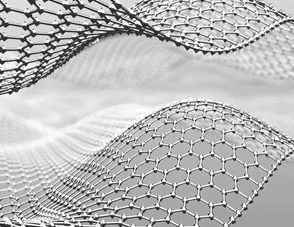
Graphene has been famous, among others, for its ultra-low friction exhibited by two graphene sheets sliding under incommensurate orientation. We investigate strategies to lift this nano-scale mechanism of ultra-low friction between solid surfaces to the macroscopic scale. Our research within the European project SSLiP shows that this can be achieved using superlubric particles – either fullerenes that we study in simulations or graphene-coated colloidal and granular particles that we study in experiments. We also image the frictional contact between superlubric 2D semiconductors: 2D transition metal dichalcogenides, such as MoS2 exhibit, besides superlubric behaviour, photoluminescence, which however becomes quenched when two or more layers are stacked. We use this property to directly image the atomic contact of two sliding superlubric monolayers. This allows us to visualize the real contact between sliding superlubric surfaces.
Quantum dots
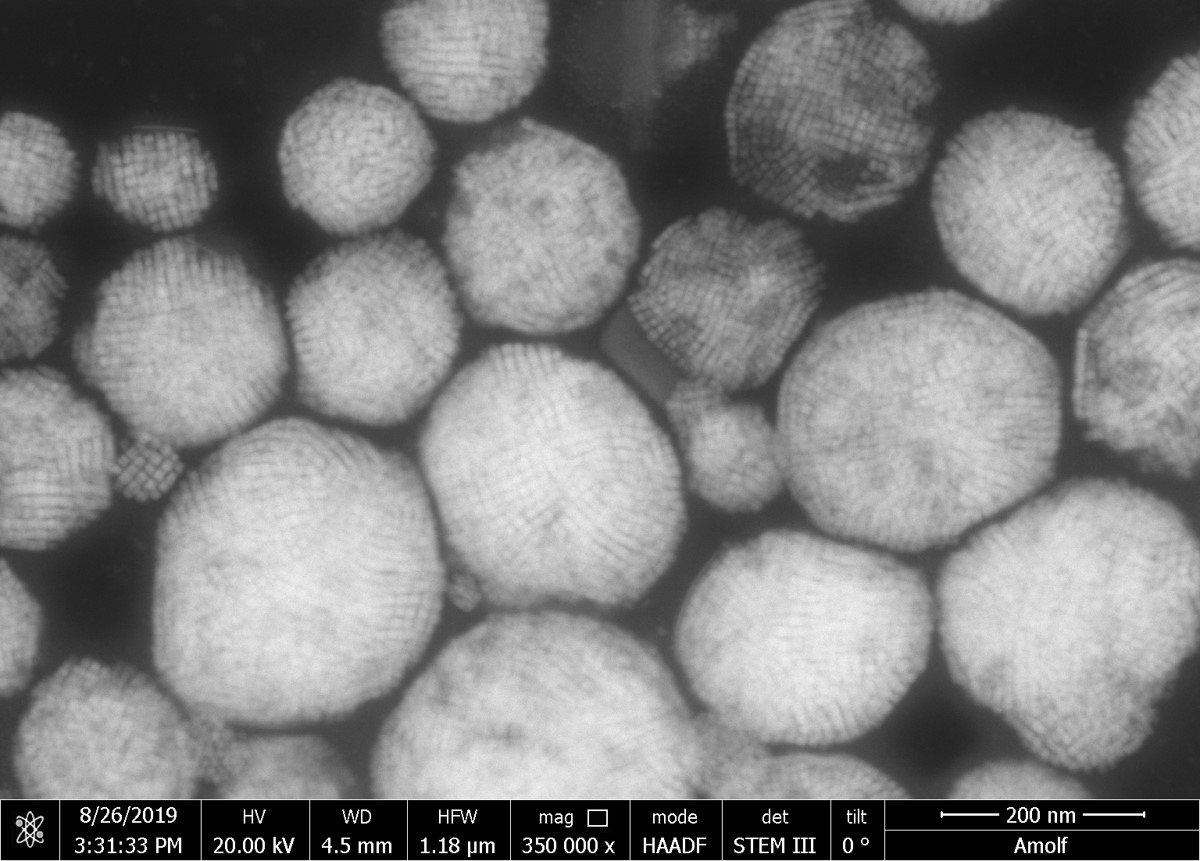
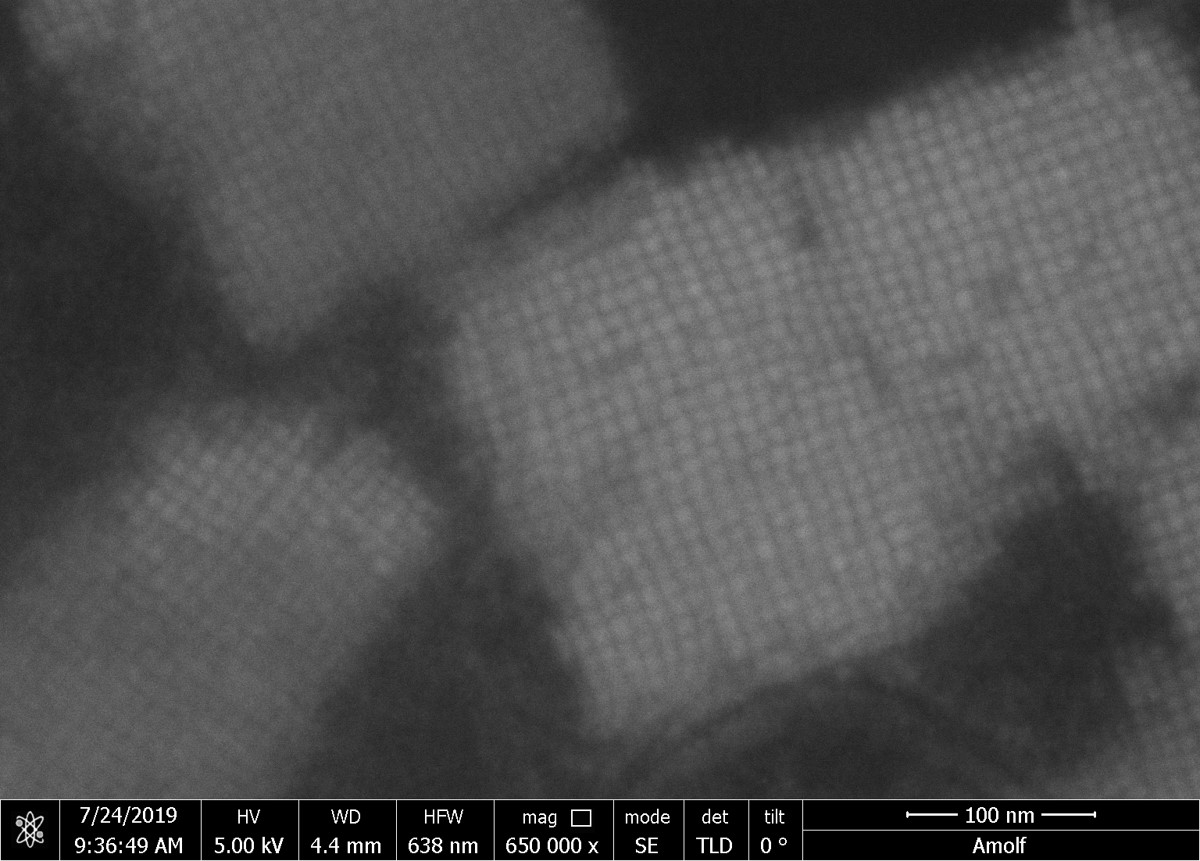
We explore how controlled mechanical motion in metamaterials can be leveraged to achieve large mechanically induced tunabilities in optical metasurfaces. The optical response of a metasurface is very sensitive to the relative spacing and rotation of the nanostructures that scatter the light. Using internal rotations and cleverly placed cuts in a thin substrate, the strain of such mechanical metamaterials can dramatically exceed that of conventional materials, enabling very large displacements of the optically resonant nanoparticles. By combining the optical and mechanical functionalities in one single design, these multifunctional materials offer new ways to dynamically control light.We explore the assembly of quantum dots into quantum-dot solids. These materials, assembled from solution-processable building blocks, hold great promise for new optoelectronic devices due to their ease of production, high tunability and flexibility. Because of their quantum confinement, quantum dots have distinct energy levels just like atoms, and their assembly into periodic structures leads to new energy bands, so-called “minibands”, analogues of bands and electronic states in atomic solids. Contrary to atoms, this mini-band structure can be tailored by the properties of the quantum dots and their ligands, determining their interactions. Yet, such design requires insight into the assembly of quantum dots, the role of surface chemistry in their coupling, and understanding of the resulting optical and electronic properties.
2D Materials
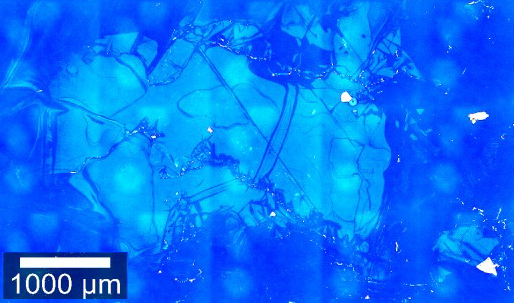
Besides graphene, there are many more two-dimensional materials with interesting mechanical, optical and electronic properties. Among them are semiconducting transition-metal dichalcogenides (TMDCs) such as MoS2 and WSe2, which show beneficial properties for applications as optoelectronic materials: they have high absorption coefficients, band gap tunable by composition, and dominant excitonic properties. In addition, they can be efficiently integrated with nanophotonic elements into photonic integrated circuits, making them ideal candidates for miniaturised photonic devices. We exfoliate millimetre-size atomic monolayers using gold-assisted exfoliation. The exfoliated layers can be stacked, or combined with other materials such as nanocrystal layers to produce heterostructures and heterostructure devices that have applications as photovoltaic films, ultrasensitive photo-detectors, and single-photon emitters.
SolarFoil
Our startup SolarFoil applies fluorescent nanomaterials to optimize the solar spectrum for better plant and algae growth in greenhouses and photobioreactors. Utilizing cutting-edge nanotechnology and photonics we aim to increase productivity, and reduce costs and energy consumption.